Event logistics and major occasions
At an event the bus is rarely the problem. The problem is that 8,000 people all want to go home at once. That is exactly what we plan for: wave services instead of continuous running, reserve instead of hope.
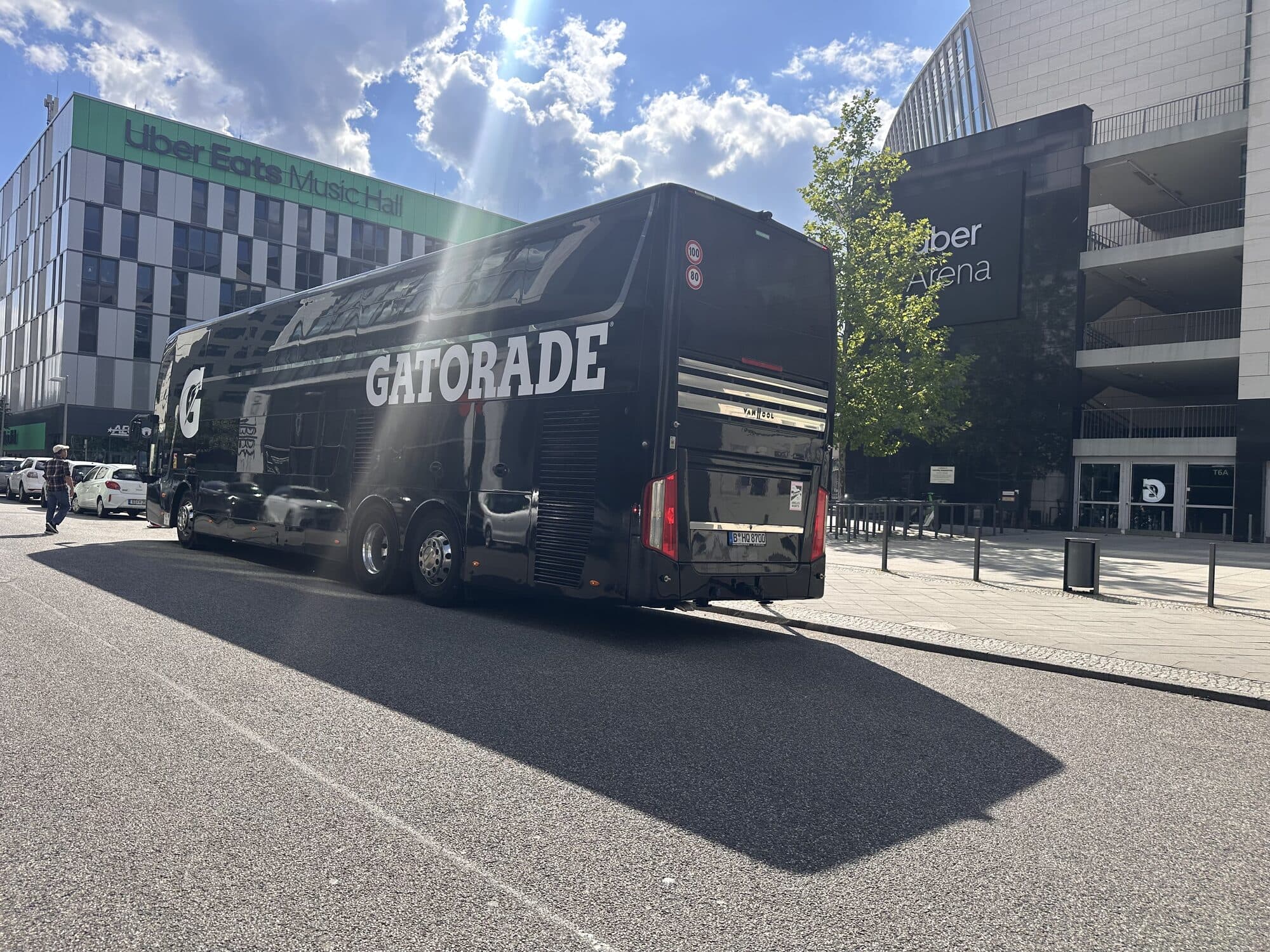
Getting people away is the real job
People arrive at an event spread over hours. They all want to leave within the same twenty minutes. Anyone who only counts the total ends up with a queue that takes two hours — and the complaints land with you, not with the bus company.
So we plan backwards from the end of the event: how many people have to leave in what time, how many vehicles that takes in the first wave, and where those vehicles stand while the encore is still playing inside. Marshalling space is almost always the bottleneck, not the vehicles.
We have handled up to 25,000 passengers in one day. What we learned doing it is in the planning: doubled signage, fixed marshals at the assembly points, and at least one vehicle in reserve that is not allocated anywhere.
When the vehicle is part of the event
For the 2026 Women’s Basketball World Cup one of our Setras became a team bus: national flag, tournament logo, team claim — wrapped in our own hall.

Building blocks we combine
- Wave serviceAll vehicles depart at once rather than to a frequency. The right choice when everyone leaves in one surge.
- Car park shuttleBetween a distant car park and the site. Short route, high frequency, often with double-deckers.
- Artist and crew transferVIP Sprinter with individual leather seats, discreet and punctual. Usually alongside the public service.
- Emergency reserveOne vehicle that is not in the plan. It sounds expensive; it is not — compared with what happens without it.
Assembly point
Clear signage and marshals save more time than any extra bus.

How we set up an event
- 01
Numbers and times
Visitor forecast, start and end times, where the assembly points are. We need no more than that for a first sizing.
- 02
Site visit
For larger events we go there beforehand. Where a twelve-metre bus can turn is not something you see on a map.
- 03
Operating plan
Vehicles, positions, times, contacts — on one sheet the event management can read too.
- 04
Operation with dispatch
During the event our dispatch desk is staffed and reachable. Changes go through one number.
After the last run
The last bus leaves when the last guest has gone.
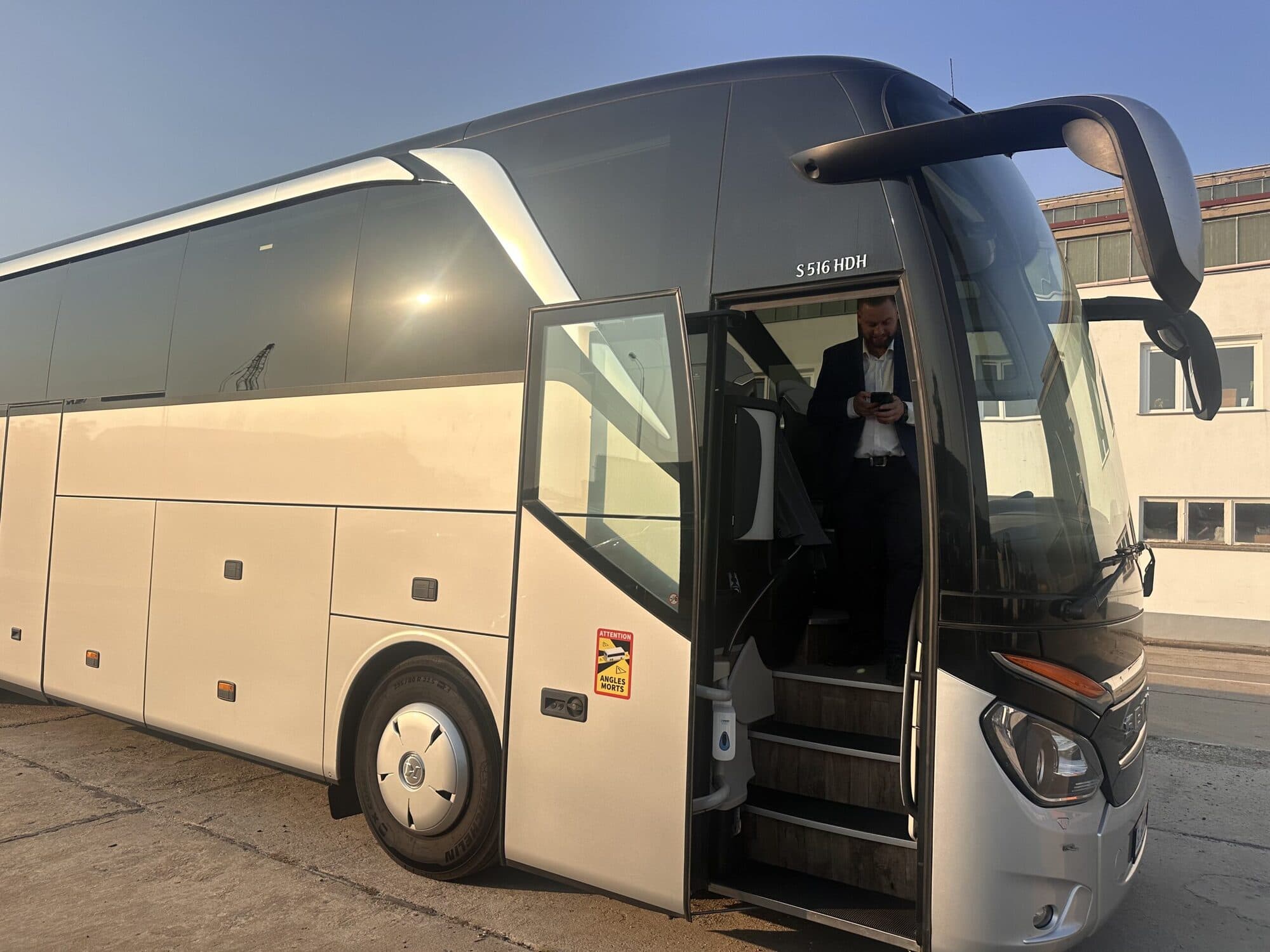
A price in one minute
Enter the route, pick a bus, get a quote. Usually straight away.
Common questions
How many vehicles can you provide at once?
Twenty from our own fleet. For larger jobs we work with regular partner operators we have known for years — but the planning and the dispatch stay with us.
Do you need a site visit?
For anything above a few hundred people: yes, and we do it at no extra charge. Marshalling space, turning room and access decide more about how the day runs than the number of vehicles.
What happens in bad weather?
The plan holds, the walking gets longer. We build rain into the calculation for open-air events from the start, because that is when everyone wants to leave at once.
Can you step in at short notice?
If vehicles are free, yes. In that case call rather than using the online calculator — for short-notice work a phone call is faster than any form.